
June 17, 2026
How to Block AI Bot Applicants and Reduce Fraud Before They Reach Your ATS
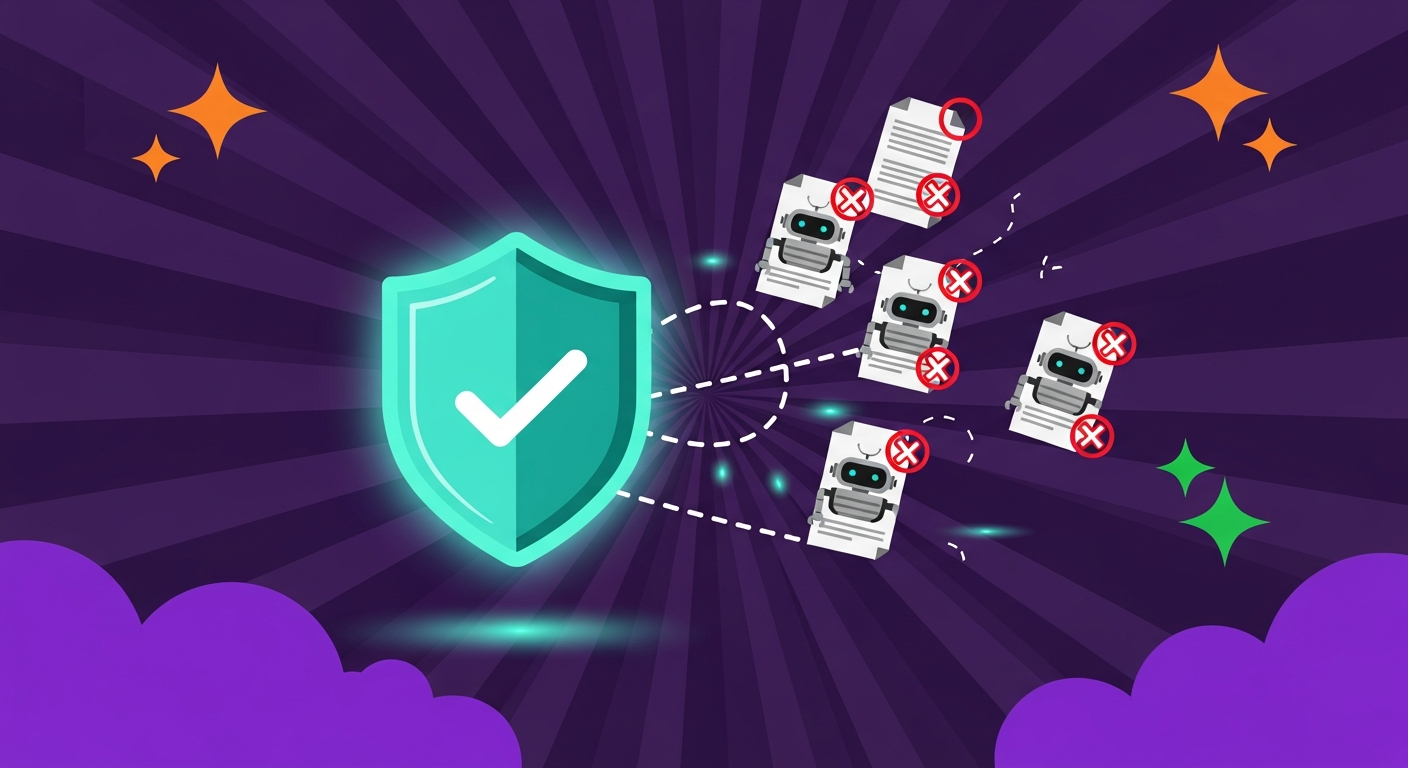
AI bot applicants are automated, AI-generated job applications submitted at scale. Tools and agents that apply to hundreds of roles with no real person behind them. You block them by putting a human verification step at the point of application, so a candidate has to prove they are a real person before anything reaches your ATS. Dalia Connect and Dalia Apply do this with a quick phone check: real applicants confirm a code sent by text in a few seconds, and automated bots and fake submissions get stopped before they ever flood your pipeline.
Key Takeaways
- TA teams are seeing application volume climb 50% or more. A large share of that new volume is automated AI noise, not real candidates.
- Gartner predicts that by 2028, one in four candidate profiles worldwide will be fake.
- Filtering inside the ATS is too late. By the time a bot application is in your system, your recruiters are already sorting through the mess.
- Dalia stops the problem upstream: applicants verify they are human with a text code before the application lands in your ATS.
- Real applicants barely notice the step. Bots and fake phone numbers can't complete it.
Why TA teams are suddenly drowning in applications
Application volume is up. And most of the increase isn't coming from more qualified people deciding to apply. It's coming from automation.
Job seekers now use AI tools and auto-apply agents that scan job boards, tailor a resume for each role, and submit applications at a scale no human could match. One person with an auto-apply tool can hit 300 jobs in a single afternoon. Multiply that across the market and you start to understand the numbers recruiting leaders are dealing with.
LinkedIn reported processing roughly 11,000 applications per minute, a 45% jump in a single year. Recruiting leaders describe seeing more than double the number of candidates per job, with quality falling as volume rises. Nine in ten HR workers reported a surge in low-effort, AI-generated applications hitting their pipelines.
For a high-volume employer, every fake or automated application your recruiters open is time they're not spending on a real person who actually wants the job. That time adds up fast.
What AI bot applicants and fraud applicants actually are
These are two related problems, and they call for the same upstream fix.
AI bot applicants are automated or AI-generated applications submitted with little or no human involvement. These range from a job seeker using a tool to blast the same resume across 300 roles, to fully automated agents applying on their own. The application looks plausible, but there's no genuine intent behind it.
Fraud applicants are submissions designed to deceive. Fake or stolen identities, applicants who don't control the contact information they provide, and organized schemes using AI-generated resumes, voices, and even video to pass as someone they're not.
Neither of these is a fringe issue anymore.
Gartner predicts that by 2028, one in four candidate profiles worldwide will be fake. In one enterprise survey, 41% of organizations said they had already hired and onboarded a fraudulent candidate. Candidate fraud creates risk well beyond a wasted interview slot. It becomes a security and compliance problem.
Why a flooded ATS is the wrong place to solve this
Most teams try to fix this inside the ATS. Tighter filters, extra screening questions, more knockout logic, sometimes their own AI to screen the AI.
That can help at the margins, but it has a structural problem: the application is already in your system. Your recruiters are still absorbing the load, and your real candidates are still buried under the noise.
When genuine, high-intent applicants sit in the same pile as thousands of automated submissions, the people you actually want to hire lose visibility. Time-to-fill stretches. Recruiter morale drops. And the more you tighten ATS filters to fight bots, the more you risk screening out qualified humans by accident.
The better place to solve this is one step earlier. Before the application ever reaches the ATS. If a bot can't complete the application, it never becomes a record your team has to deal with.
How to block bot and fraud applicants before your ATS floods
The most effective filter is the one thing a bot or a fake identity can't produce on demand: a real person, with a real phone, responding in real time.
Dalia Connect and Dalia Apply add a lightweight human verification step at the point of application. An applicant has to verify themselves with a code sent by text before their application goes through. It works like the two-factor authentication people already use to log into their bank or email. Familiar experience, takes seconds.
Here's why this cuts the problem at the source.
Bots can't complete it. Automated applications and AI agents can't receive a text on a real device and enter the code in real time. They're stopped before they reach your ATS.
Fake phone numbers don't get through. A candidate has to actually control the number they provide. If someone enters a number they don't own, they can't verify, and the application doesn't go through.
Real applicants barely notice. A genuine person verifying their own phone clears the step in seconds. No CAPTCHA puzzle, no long form. No meaningful friction for the people you want.
The result: the junk is filtered out before it becomes your recruiters' problem, and the applications that land in your ATS are far more likely to be real, human, and worth a look.
This protects your real applicants, not just your inbox
The goal here isn't fewer applicants. The goal is more of the right ones, and a pipeline your team can actually trust.
Your career site is where your highest-intent candidates show up. They came to you directly, which makes them some of the best applicants you get. Career site applicants are hired at 3 to 5x the rate of job board applicants. When that channel gets drowned in automated noise, those real people are the ones who get lost.
Verifying humans at the point of application protects the quality of the pipeline that career site conversion is built to grow. The conversions you earn are conversions you can rely on.
If you want to see what your career site is converting today, and how much of your current volume is real, a free career site audit is the fastest way to get a clear picture.
Frequently Asked Questions
Does adding verification hurt my conversion rate?
For real applicants, the step takes seconds and uses the same kind of text-code verification people already know from banking and email. The applicants it filters out are the ones you didn't want in the first place.
Can bots get past a text verification step?
Casual auto-apply tools and AI agents can't receive a one-time code on a real device and enter it in real time. The large majority of automated and bulk submissions are stopped at this step. No single step is a silver bullet against every sophisticated fraud operation, but it removes the flood of low-effort bot and fake applications that make up most of the problem.
How is this different from screening inside my ATS?
ATS filters act after the application is already in your system. Your recruiters still carry the load and your real candidates are still buried. Verifying humans at the point of application stops bot and fraud submissions before they ever become a record in your ATS.
What about applicants who don't have a mobile phone?
Most candidates applying online have a phone they can verify with, which is why a text code works as a low-friction check. For edge cases, confirm how Dalia Connect and Dalia Apply handle alternatives so no genuine applicant is shut out.
Will this stop candidate fraud completely?
No single step eliminates fraud entirely. Verifying that an applicant controls the phone number they provide raises the bar significantly and removes the easiest, highest-volume forms of bot and fake applications. That's where most of the wasted recruiter time comes from.
Want fewer bots and more real applicants in your ATS?
Learn more about Dalia Bot Apply Protection.